Day 2 of 5. The 40-year gap and how to skip it.
After the motor caught on, factories did something dumb.
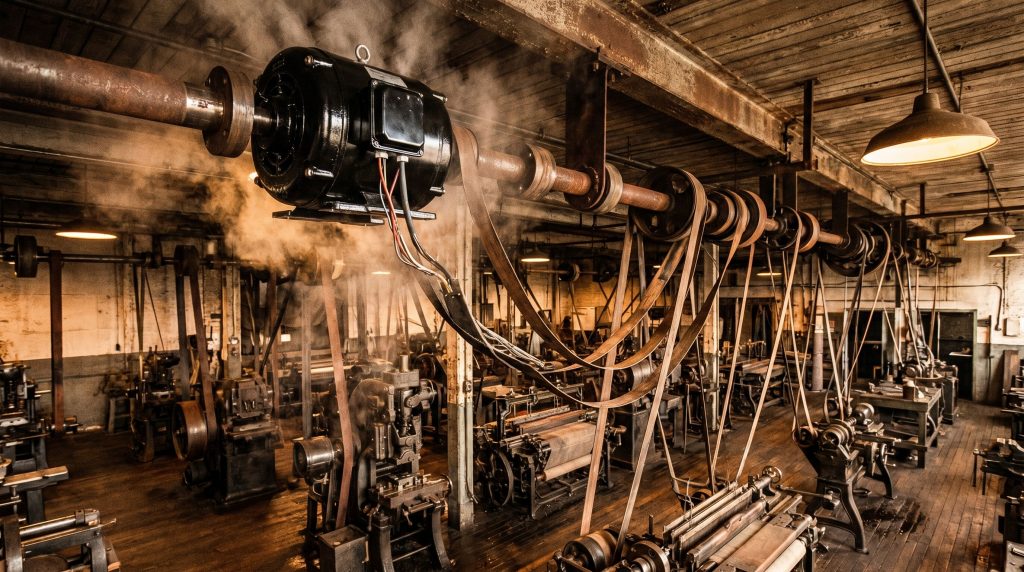
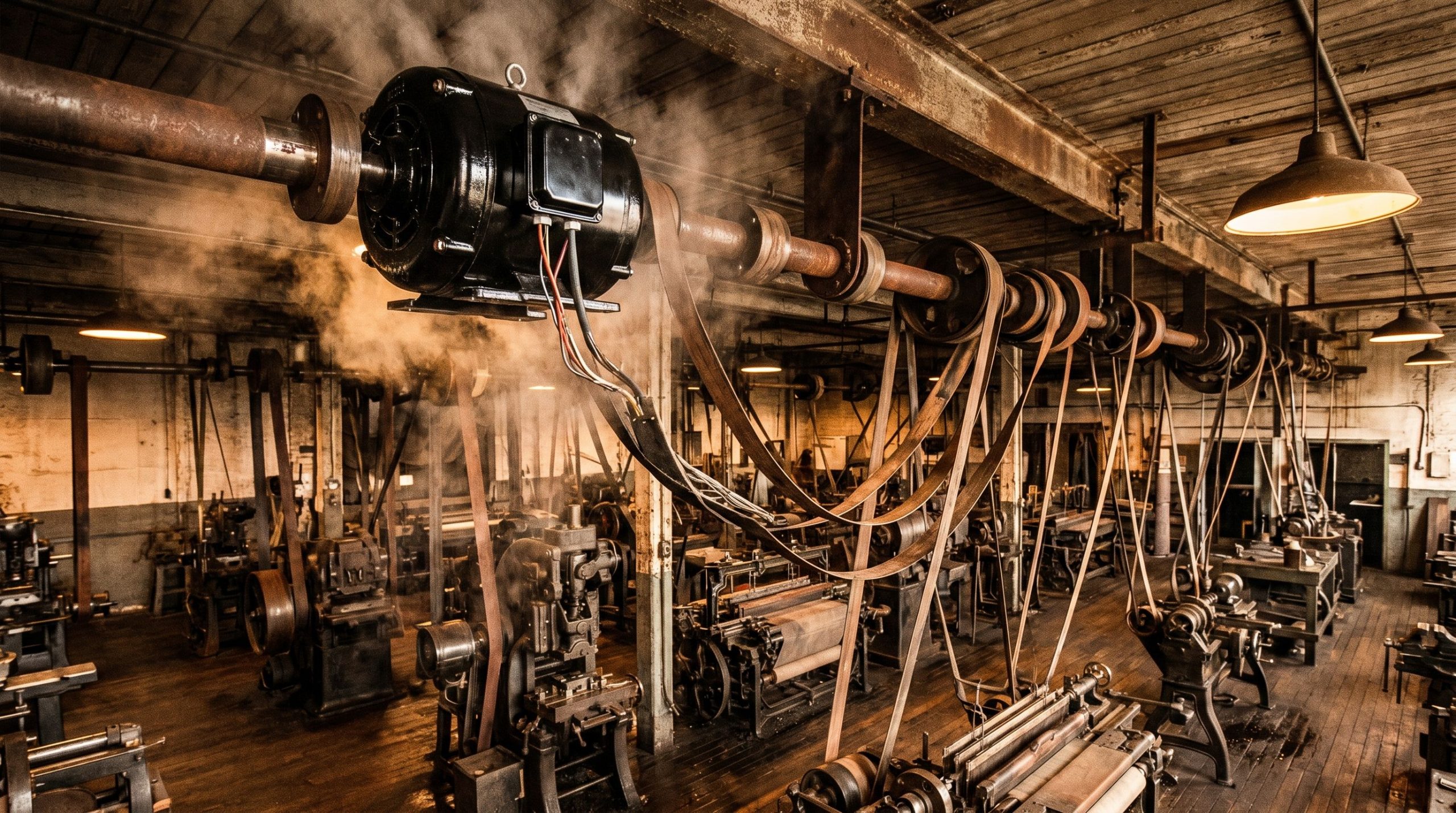
They yanked the steam engine out. Dropped one giant electric motor in the exact same spot. Ran the same leather belts to the same machines on the same floor plan. Then they stood back and waited for productivity to skyrocket.
Engineers had a name for it. “Group drive.” One central motor, belts and pulleys spidering out across the ceiling to every workstation.
It looked modern. It worked exactly like steam.
The motor was 1882. Everything around it was 1850.
Productivity stayed flat for two decades.
This is the trap every Fortune 500 is currently sitting in.
You read yesterday’s piece. You know the setup. Big firms bought AI. Individual people got faster. The company did not.
Here is what is actually happening when you peek under the hood.
Their marketing team installed a copywriting AI. It pumps out emails, ad variants, landing page tests at the speed of light. The marketing team is, individually, the most productive marketing team that has ever existed.
The sales team has a different AI. It scores leads, drafts outreach, suggests next-best actions.
The finance team has a different AI again. Watches spend. Flags anomalies. Builds forecasts.
Three smart tools. Zero pipeline.
The marketing AI ships a campaign. The sales AI does not know it shipped. The finance AI flags the spike in ad spend as suspicious and starts an investigation.
Belts and pulleys with a ChatGPT wrapper.
a16z calls this the Coordination Problem.
Plain version. AI agents without defined handoffs are not a productivity tool. They are an expensive way to generate output that nobody picks up.
You can have the smartest agent in the world drafting your follow-up emails. If nobody logs the conversation, that email goes nowhere. The lead does not know you exist tomorrow.
This is the diagnosis. Their AI is not failing because the AI is bad. Their AI is failing because the org around it is shaped like a steam-era factory.
New engine. Old transmission.
Now look at your operation.
Same problem. Smaller scale.
ChatGPT writes the email. Who logs it. Who follows up. Who knows the lead exists tomorrow when you’re up to your eyeballs in something else.
You drafted the proposal in twenty minutes instead of two hours. Where does it live. Did the client get it. Who is chasing the signature.
The phone rang. The AI receptionist took the call. Did anyone see the transcript. Is the contact in the CRM. Is there a task on someone’s list to call back.
If those questions do not have answers that work without you remembering, you are running group drive.
Same paradox. Different decade.
Here is the difference. The whole point of this series.
A Fortune 500 fixes the Coordination Problem with a reorg.
New roles. New reporting lines. New software contracts. New change management deck. Months of meetings. Quarters of rollout. Years of internal politics about whose job is now whose.
You fix it by Friday.
You write down what counts as a lead. You pick one place for every lead to land. You set up one automation to make sure nothing waits on you remembering.
Three decisions. One afternoon. Done.
You can fix in a weekend what a billion-dollar firm needs a board meeting to even discuss.
Tomorrow I show you exactly why that gap is structural, not lucky. Why your size, the thing you probably apologize for, just became the most valuable thing on the org chart.
Tools don’t ship leads. Pipes do.
See you tomorrow.
Larry Fischer is the founder of Internet Media Now. He helps service businesses build the systems that turn leads into customers. Learn more at InternetMediaNow.com.