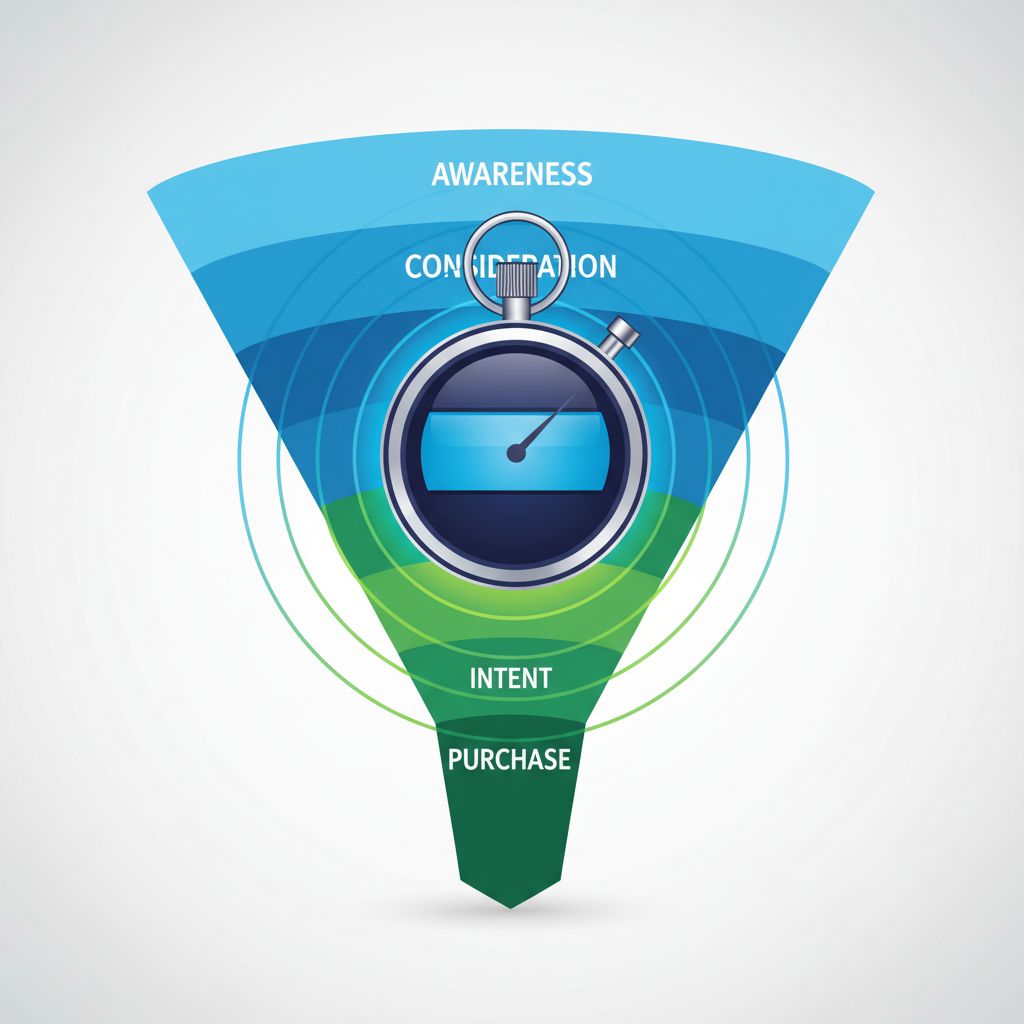
By the time a prospect fills out your contact form, they have already made up their mind.
Not necessarily to buy from you. To buy from someone.
They have read the reviews, checked your pricing page, probably looked at a competitor or two, and landed back on you. The research is done. All they are doing now is deciding who picks up the phone first.
Here is the problem: most businesses are still running outreach like it is 2014.
Mass email blasts. Cold calls to a list that hasn’t been touched in six months. LinkedIn connection requests that go nowhere. If this is your sales process, you are not just losing deals. You are interrupting people who were not interested and ignoring people who were.
The buyer already moved. Your process didn’t.
Studies consistently show that today’s buyers complete most of their research before they ever make contact with a vendor. They don’t want to talk to a salesperson until they are close to ready. And when they are ready, they want a response fast, they want it personalized, and they have zero patience for a pitch that feels like it was written for someone else.
Generic outreach gets ignored. Not because people are rude. Because it is not for them and they know it.
Intent signals change everything.
This is where modern sales tools have quietly shifted the game.
Intent platforms now monitor the digital behaviors that indicate someone is actively shopping. Things like:
-
Visiting a competitor’s website
-
Spending significant time on your pricing page
-
Reading case studies or comparison articles
-
Searching specific industry terms
When those signals fire, outreach goes out. Not on a Tuesday morning when your rep feels like doing prospecting. Right now. At the exact moment the buyer is thinking about this.
The result is sales cycles shrinking by 20 to 30 percent. Not because salespeople got better at pushing. Because the timing got better.
Showing up at the right moment feels like a warm call even when it isn’t. Showing up at the wrong moment feels like spam even when your offer is perfect.
The numbers back this up.
Personalized, buyer-specific outreach lifts demo attendance by more than 40 percent. AI-assisted lead generation and appointment setting tools are boosting pipeline by up to 50 percent for businesses that have implemented them. And the admin work that used to eat up a salesperson’s day, data entry, follow-up emails, scheduling, research, is largely gone. AI handles it. Humans close.
This isn’t a large-enterprise story. SMB owners are the ones who stand to gain the most here, because you don’t have a team of 12 reps to absorb the inefficiency. Every missed timing window costs you directly.
What this means for your business right now.
A few practical things worth considering:
First, your CRM should be doing more than storing contacts. If it is not tracking behavior, surfacing hot leads, and triggering follow-up automatically, it is just an expensive spreadsheet.
Second, your website is generating intent signals right now that you are not reading. Every visit to your pricing page is someone raising their hand. An AI chatbot that engages them in that moment, not tomorrow, not after you check your email, converts at a rate that makes most paid ad campaigns look lazy by comparison.
Third, the businesses that figure this out in the next 12 months will have a structural advantage that won’t be easy to close. It is not just about efficiency. It is about being present when the buyer is present.
The old way was to stay in front of as many people as possible and hope the timing worked out.
The new way is knowing when the timing is right and showing up then.
That is not a small difference. That is the whole game.